

Table of Contents
- What Parents Actually Need From Daycare Bedding
- What Should a Daycare Bedding Set Include?
- Sizing: Cot Sheets, Nap Mats and Everything In Between
- Daycare Cot Sheets vs Nap Mats: Which Works Better?
- Why Washable Daycare Bedding Saves You Money
- Daycare Nap Mat Alternatives That Actually Hold Up
- Portable Bedding for Childcare: What to Check Before You Buy
- Materials, Safety and Australian Standards
- Frequently Asked Questions
Last Updated: 14 October 2026
What Parents Actually Need From Daycare Bedding
Most parents start shopping for the 5 best daycare bedding sets in Australia by comparing patterns and prices. That is the wrong starting point. What actually matters is whether the bedding survives a kindy wash cycle three times a week, fits the cot or mat your centre provides, and feels familiar enough that your child settles without you there.
This guide from Cozie Dozie Co. skips the marketing claims and walks through the practical criteria: sizing, materials, washability, portability, and what the Australian standards actually require. Below, we break down every decision point so you can choose once and stop replacing bedding every term.
Daycare bedding is the set of sheets, covers, and mats a child uses for rest time at a childcare centre or kindergarten. It differs from home bedding because it must be portable, frequently washable, and sized to the specific cot or mat the centre provides.
The problem is that centres vary enormously. Some supply cots and ask you to bring only a fitted sheet and blanket. Others require a named nap mat that rolls up and fits in a bag. A few ask for a full sleep set plus a spare. Buying before you know which category your centre falls into is the most common and most expensive mistake.
What Should a Daycare Bedding Set Include?
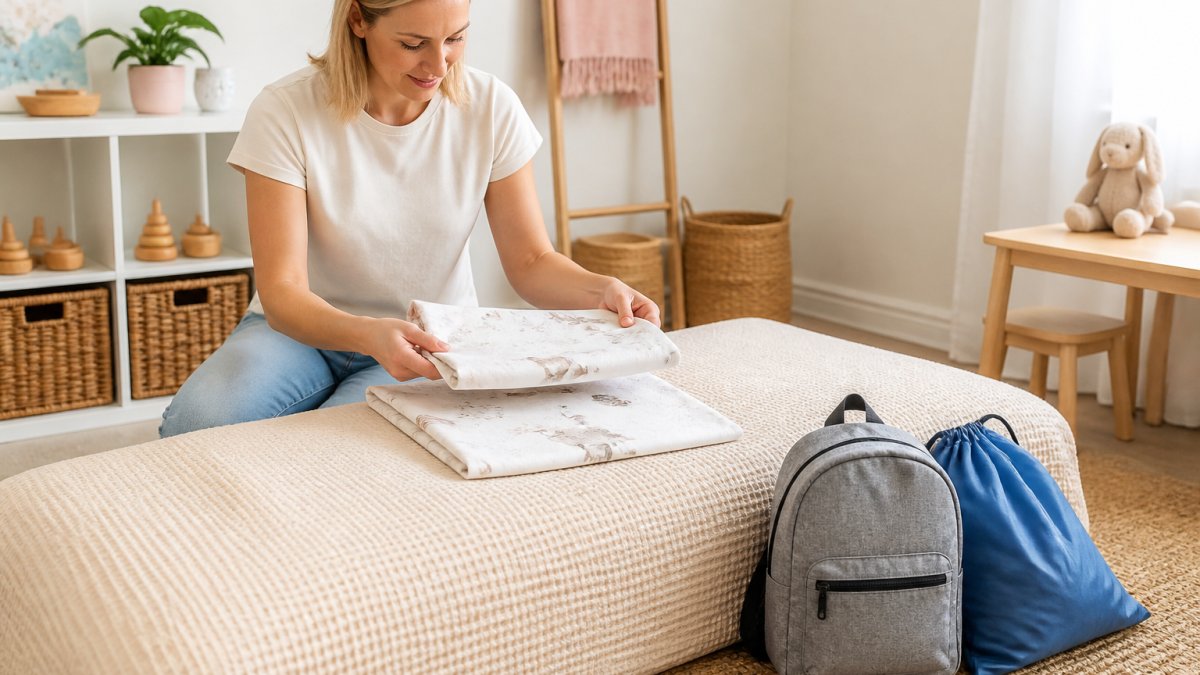
A complete daycare bedding set includes a fitted sheet sized to the centre's cot or mat, a light blanket or cover, a named storage bag, and often a spare set for accidents. Extras like pillows depend on the centre's policy and the child's age.
The Non-Negotiables
Every set you consider should cover these four items:
- Fitted sheet matched to the cot or mat dimensions your centre uses
- Light cover or blanket that a child can pull on and off independently
- Named storage bag so bedding does not get mixed up with other children's
- Spare set for the inevitable accident, illness, or spilled drink
Anything beyond that is preference. Pillows are usually not permitted for children under two, and many centres restrict them entirely for hygiene reasons. Check your centre's sleep policy before adding one.
Sizing: Cot Sheets, Nap Mats and Everything In Between
Sizing is where most purchases go wrong. Daycare cot sheets, nap mats, and rest mats are not standardised across centres, and a sheet that fits one service will not fit another.
Ask your centre for the exact dimensions and the type of sleep furniture they use. Then match your purchase to those numbers, not to a generic "toddler size" label. If the centre uses a mat on the floor, a fitted cot sheet will be useless. If they use a cot, a flat mat cover will bunch underneath your child.
A practical approach is to measure the cot or mat yourself during a visit. Take a tape measure, note the length, width, and depth, and photograph the label if there is one. This five-minute task prevents a term of wrestling with ill-fitting bedding.
| Sleep Setup | What You Need | What to Avoid |
|---|---|---|
| Centre cot | Fitted sheet to cot dimensions, light cover | Flat sheets that bunch |
| Floor nap mat | Mat cover or fitted mat sheet | Cot sheets, too large |
| Rest mat with raised edges | Sheet with deep corners | Shallow fitted sheets |
| Shared sleep area | Named bag, spare set | Unlabelled loose bedding |
Daycare Cot Sheets vs Nap Mats: Which Works Better?
Cot sheets work better when your centre provides cots, while nap mats suit centres that use floor rest mats or shared sleep areas. The right choice depends entirely on your centre's setup, not on which product is more popular.
Cot sheets give a familiar bed-like feel, which helps children who settle better in a proper bed. They stay put, which matters for wriggly sleepers. The trade-off is that they only work if the centre has cots.
Nap mats are more portable and easier to store, but they can slide on hard floors and offer less cushioning. For children with sensory sensitivities, the flatter surface of a mat can feel less secure than a fitted sheet with gentle resistance.
If your centre uses mats but your child sleeps better on sheets, look for a mat cover made from soft, breathable fabric rather than a plastic-backed mat. The material matters more than the format.
Why Washable Daycare Bedding Saves You Money
Washable daycare bedding saves money because bedding used five days a week goes home for washing weekly, and synthetic or poorly made sets degrade quickly under that cycle. A set that survives two years of regular washing costs far less per term than a cheap set replaced every few months.
The practical test is simple: check the care label before buying. If the fabric requires cold hand washing or cannot be tumble dried, it will not survive a daycare routine. Look for machine-washable fabrics that hold their shape and colour after repeated cycles.
Natural fibres such as linen and cotton tend to soften with washing rather than pill or fray. They also breathe better than synthetic blends, which matters in warmer months when a child is napping in a heated room.
Wash frequency varies by centre. Some send bedding home every Friday. Others ask for washing after any illness or accident. Either way, plan for at least one wash per week, plus spares.
Daycare Nap Mat Alternatives That Actually Hold Up
Daycare nap mat alternatives include fitted mat covers, floor beds, and portable swags, each suited to different centre policies and family needs. The best alternative is the one your centre will actually accept.
Fitted mat covers work well where the centre supplies a mat but not the covering. They are cheaper than a full mat and easier to wash. Floor beds suit centres that allow children to sleep on low surfaces and give a more bed-like feel for children who resist mats.
Portable swags and roll-up sleep systems suit families who need the same bedding for daycare, camping, and travel. They are more expensive upfront but replace three separate purchases.
What most guides miss is that centres often have rules about what can be brought from home. Some prohibit anything that cannot be wiped or washed on site. Others require bedding to fit inside a named bag stored on the child's hook. Confirm these rules before buying any alternative.
Portable Bedding for Childcare: What to Check Before You Buy
Portable bedding for childcare must roll or fold small enough to fit a named bag, wash clean of food and outdoor mess, and hold its shape after repeated packing. Check these three things before you buy.
First, check the packed size and weight. If it does not fit your child's bag or the centre's storage hook, it will not get used. Second, check the closure. Zips, press studs, and elastic straps all fail differently. A simple roll with a secure strap often outlasts a complex folding system.
Third, check the fabric's response to mud, sand, and spills. Families who camp and travel need bedding that can be brushed off and washed without special treatment. Waterproof backing helps on damp ground but can feel hot against skin, so look for a breathable face fabric with a waterproof layer behind it.
- Packed size fits the centre's named bag or hook
- Machine washable and tumble dry safe
- Secure closure that survives daily packing
- Breathable face fabric, waterproof backing if used outdoors
- Spare set available for accidents
Materials, Safety and Australian Standards
Australian standards govern the safety of children's sleep products, and any bedding you buy should comply with the relevant voluntary and mandatory standards for the product type. Check the label and the manufacturer's compliance statement before purchase.
For safe sleep, the key principles are firm surfaces, fitted sheets that cannot come loose, and no loose bedding around an infant's face. These principles come from Red Nose safe sleeping guidance, which Australian childcare services follow.
Products sold in Australia must meet ACCC product safety requirements for the category they fall into. If a seller cannot tell you which standard a product complies with, that is a reason to walk away.
Material choice matters for comfort and longevity. Linen and cotton breathe well and soften with washing. Synthetic fills can trap heat. If your child has sensory sensitivities, texture is not a minor detail. A rough seam or scratchy label can be the difference between a settled nap and a distressed one.
Cozie Dozie Co. builds kindergarten bed and sheet sets from recycled French linen with a waterproof PUL canvas backing, designed on Country and flat-packed for easy storage. We ship free Australia-wide.
Choosing daycare bedding is not about finding the prettiest print. It is about matching the set to your centre's cot or mat, buying fabric that survives weekly washing, and giving your child something familiar to settle into. That is where most purchases fail, and it is the easiest thing to get right. Cozie Dozie Co. builds kindergarten bed and sheet sets from recycled French linen with a waterproof PUL canvas backing, flat-packed for easy storage and free shipping Australia-wide. Shop the range and give your child a sleep space that travels with them.
Frequently Asked Questions
What should a daycare bedding set include?
A practical set covers a fitted sheet or flat sheet sized to the cot or mat, a lightweight blanket or cover, and a storage bag for transport. Some centres ask for a separate top sheet and blanket rather than a sleeping bag. Check your centre's list first, because requirements vary. Look for items that are machine washable, easy to label, and sized to fit the specific cot or mat your child uses.
Are washable daycare bedding sets machine washable?
Most quality washable daycare bedding is designed for regular machine washing, usually on a warm cycle. Check the care label before buying. Linen and cotton blends generally handle frequent washing well and soften over time. Avoid bedding that requires hand washing or dry cleaning, as it will not survive the weekly wash cycle that daycare use demands. Buying two sets means one is always clean and ready.
What is the best alternative to a daycare nap mat?
Fitted cot sheets paired with a lightweight blanket offer a more secure sleep surface than a standard nap mat, which can bunch or slide. Portable bedding with a waterproof backing also works well for centres that rest children on the floor. The best option depends on what your centre provides. Ask whether they use cots, stretchers or floor mats, then match your bedding to that setup.
How many daycare bedding sets does a child need?
Two full sets is the practical minimum. One stays at the centre during the week while the other is washed and ready at home. If your child attends five days, or if the centre sends bedding home every day, three sets reduce the pressure of same-day washing. Label everything clearly with your child's name, as items get mixed up easily in shared storage areas.