

Table of Contents
- What to Check Before You Buy Sustainable Kids Travel Sheets
- Organic Cotton Travel Cot Sheets: What Parents Should Know
- Recycled Linen Kids Sheets: Comfort, Durability and Feel
- Travel Cot Sheet Size Guide: Getting the Fit Right
- Washable Children's Travel Bedding: Care and Longevity
- Why Buy Sustainable Kids Travel Sheets for Sensory-Sensitive Children
- Common Mistakes When Buying Travel Sheets for Kids
- Frequently Asked Questions
Last Updated: October 19, 2026
What to Check Before You Buy Sustainable Kids Travel Sheets
Buying sustainable kids travel sheets comes down to four checks: fibre content, certification, fit, and how the sheet handles washing. Get those right and you avoid the two most common regrets, sheets that pill after three washes and sheets that slide off the mattress at 2am. This guide from Cozie Dozie Co. walks through each check in the order that matters.
Most parents start with the fabric. That is the wrong order. Fit matters more, because a beautiful organic cotton sheet that bunches under a wriggling toddler will be stripped off the mattress before midnight. Fibre comes second, then care, then price.
Here is the sequence we recommend working through:
- Fit first. Measure the mattress, not the cot frame.
- Fibre second. Natural or recycled fibres breathe better than polyester blends.
- Certification third. Look for recognised textile safety standards, not vague "eco" badges.
- Care last. Check the wash label before you commit.
The Australian Competition and Consumer Commission guide to product safety is a sensible starting point for understanding what mandatory standards apply to children's bedding sold here.
A common mistake is buying on feel alone in the shop. Linen and cotton both feel lovely folded on a shelf. Only the wash label tells you what happens after twenty cycles.
Organic Cotton Travel Cot Sheets: What Parents Should Know
Organic cotton travel cot sheets are sheets woven from cotton grown without synthetic pesticides, usually certified through a recognised organic standard. The fibre breathes well, softens with washing, and suits most children's skin.
What most guides miss is that "organic cotton" is not a regulated phrase in itself. Anyone can print it on a label. The claim only means something when a third-party certifier backs it, and the Australian Organic standard for certified products explains what that certification actually covers.
Three practical points when comparing organic cotton options:
- Check the certification body, not just the word "organic" on the tag.
- Expect some shrinkage on the first wash with untreated cotton. Buy for the mattress size, not a size up.
- Feel for weight. Thin organic cotton feels soft but wears through faster at the corners.
Where organic cotton falls short is durability under heavy use. Families doing daily daycare runs often find linen outlasts it.
Recycled Linen Kids Sheets: Comfort, Durability and Feel
Recycled linen kids sheets are made from linen fibre reclaimed and rewoven into new fabric. Linen is stronger wet than dry, which is why it survives frequent washing better than most cotton weaves, and it has a natural texture that many sensory-sensitive children find calming rather than irritating.
The feel is the selling point and the catch. Linen starts crisp and softens over the first several washes. If your child rejects anything with texture, give linen a wash or two before the first trip.
Our own sheets use butter-soft recycled French linen with a waterproof PUL canvas backing, which means a spill on a road trip does not soak through to the mattress. That backing is the detail most shoppers overlook when comparing linen against cotton.
Durability under rough treatment is where linen earns its place. Mud, sand, and a washing machine every few days are a normal week for camping families. Linen handles that cycle better than thin cotton, provided you skip the tumble dryer on high heat.
Travel Cot Sheet Size Guide: Getting the Fit Right
Getting the fit right means measuring your specific travel cot mattress, because travel cot sizes vary between models and brands. There is no single universal size, and a sheet bought for one cot often will not fit another.
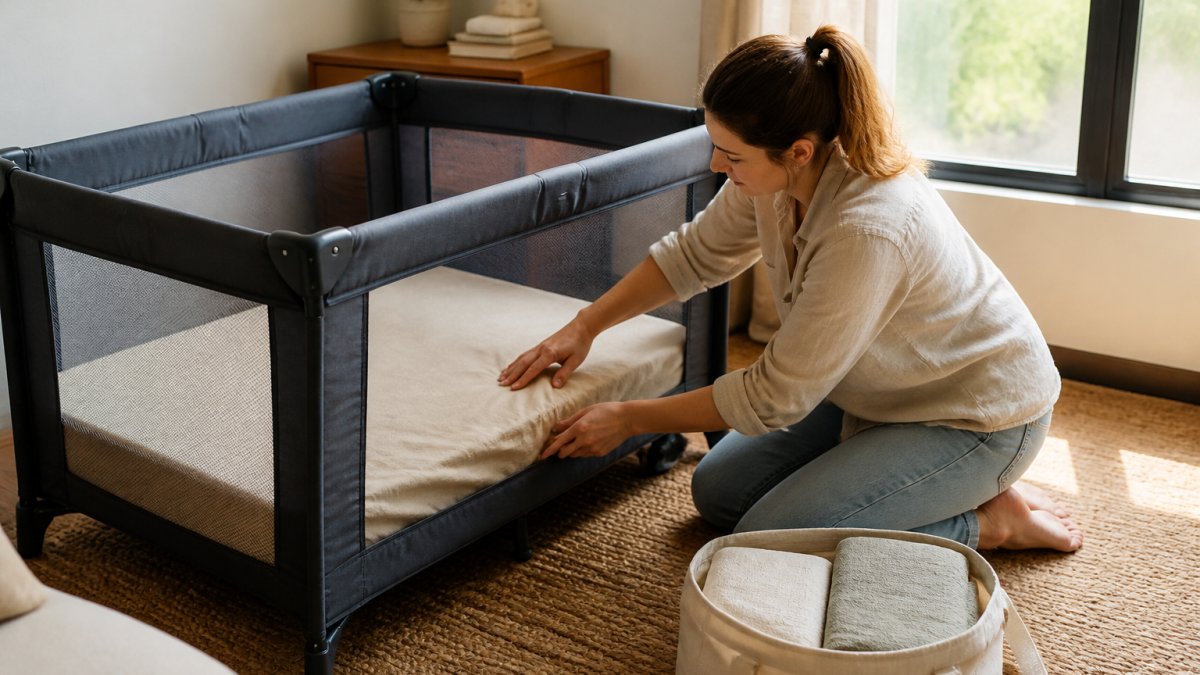
Measure length, width, and mattress depth with a tape, then compare against the sheet's stated dimensions. A fitted sheet needs enough depth to tuck under the mattress without pulling taut across the top.
| What to measure | Why it matters | Common error |
|---|---|---|
| Mattress length | Prevents bunching at the ends | Measuring the cot frame instead |
| Mattress width | Stops the sheet riding up the sides | Assuming a standard width |
| Mattress depth | Ensures corners tuck under | Ignoring depth on thicker mattresses |
| Shrinkage allowance | Keeps fit after washing | Buying exact size with no margin |
A sheet that is slightly generous beats one that is slightly tight. Tight sheets pop off corners the moment a child rolls.
Washable Children's Travel Bedding: Care and Longevity
Washable children's travel bedding should survive frequent machine washing without losing shape, colour, or softness. That is the whole point of buying it, so treat the care label as part of the product spec.
Practical care rules that extend life:
- Wash on a gentle cycle with a mild detergent.
- Skip fabric softener, which coats fibres and reduces breathability.
- Air dry where possible, or use a low tumble setting.
- Wash the sheet separately from towels to reduce abrasion.
Families using bedding daily at daycare should expect to wash it several times a week. Linen and quality cotton both cope with that rhythm. Cheap blends pill and thin out within a season.
Why Buy Sustainable Kids Travel Sheets for Sensory-Sensitive Children
Sustainable kids travel sheets help sensory-sensitive children because familiar texture and smell do a lot of the settling work in an unfamiliar room. A child who sleeps on the same linen at home and on holiday has one less thing to adjust to.
The Raising Children Network guidance on sleep for children notes that consistent sleep routines and familiar comfort objects support settling, which is exactly what a portable, familiar sheet provides.
What makes the difference in practice:
- Consistent texture. The same fabric feel at home, at daycare, and in a hotel cot.
- Familiar smell. A sheet washed in your usual detergent carries home with it.
- Weight and drape. Linen settles against the body rather than floating.
- No scratchy labels or rough seams against the skin.
This is where a purpose-made sensory-friendly sheet beats a supermarket travel set. The supermarket version is designed to be cheap, not to feel the same every night.
Common Mistakes When Buying Travel Sheets for Kids
The most common mistake is buying for the cot you have now without checking whether the sheet will fit the next one. Travel cots get replaced, borrowed, and upgraded. A sheet with a little size flexibility lasts longer.
Other mistakes we see often:
- Trusting "eco" without a certifier. The word alone means nothing.
- Skipping the wash test. Buy one, wash it, then commit to more.
- Ignoring the backing. A waterproof layer saves the mattress on road trips.
- Buying too few. One sheet means washing mid-trip. Two is the practical minimum.
- Overlooking shipping. Check delivery terms before you order, especially to regional areas.
The challenge with travel bedding is that most sets are built for occasional use, not for a child who needs the same comforting feel every night, wherever they are. At Cozie Dozie Co., we make portable, sensory-safe sleep and play environments from butter-soft recycled French linen with a waterproof PUL canvas backing, designed on Country and flat-packed for easy packing. Shipping is free Australia-wide, so regional families are not penalised on delivery. Shop the range and give your little adventurer a familiar place to rest, wherever the road takes you.
Frequently Asked Questions
What are the best materials for sustainable children's travel sheets?
The two most common choices are organic cotton and recycled linen. Organic cotton is soft, breathable and washes well, which suits frequent use. Recycled linen is stronger, gets softer with each wash and dries quickly, so it holds up to camping and daycare rotation. Look for a waterproof backing if the sheet will sit on a travel cot or floor bed, and check that any dyes or finishes are low-impact. Both materials work; the right pick depends on whether you prioritise softness or durability.
How do I choose the right size sheet for a travel bed?
Measure the mattress itself, not the frame, and check the depth as well as the length and width. Travel cot mattresses vary between brands, so a sheet that fits one cot may be loose on another. A fitted sheet with a deep skirt and elastic all round gives the snug fit you want, and a flat sheet should have enough overhang to tuck securely. If you are buying online, confirm the stated dimensions against your own measurement before ordering.
Are recycled linen sheets comfortable for children?
Yes. Recycled linen starts slightly crisp and softens with every wash, so it becomes comfortable quickly. It breathes well, which helps on warm nights, and it dries faster than cotton, which matters when you are washing bedding on the road. Children with sensory sensitivities often settle well with linen because it is smooth and lightweight rather than bulky. Pre-wash new linen once before first use to soften it and remove any manufacturing residue.
How should I wash and care for children's travel sheets?
Wash on a gentle cycle in cool or lukewarm water with a mild detergent, and avoid fabric softener because it coats the fibres and reduces breathability. Tumble dry on low or line dry, and shake linen out before hanging to reduce creasing. For camping trips, a quick cold rinse and line dry is usually enough between proper washes. Check the care label for the waterproof backing, as some need a cooler wash to protect the coating.