

Table of Contents
- Why Choose Recycled Linen for Kids: The Basics
- Linen Versus Cotton Bedding for Children
- The Benefits of French Linen for Toddlers
- How Recycled Linen Supports Sensory-Sensitive Kids
- Durability: Will Recycled Linen Survive Mud, Sand and Daily Use?
- How to Care for Linen Bedding
- Potential Drawbacks of Recycled Linen (And Why They Rarely Matter)
- Conclusion
- Frequently Asked Questions
Last Updated: October 21, 2026
Why Choose Recycled Linen for Kids: The Basics
Recycled linen is a fabric made from reclaimed linen fibres, reprocessed into new yarn and woven into fresh cloth. Parents choose recycled linen for kids because it is soft against sensitive skin, breathable through hot nights, and made from a fibre that would otherwise be discarded. At Cozie Dozie Co., we build our kindergarten sheet sets, kids' swags and sensory floor beds from recycled French linen.
The case for recycled linen starts with what it replaces. Conventional cotton bedding carries a heavy footprint in water and land use, and Textile Exchange's Materials Market Report tracks how fibre choice shapes that footprint across the industry. Linen, by contrast, comes from the flax plant, which grows with comparatively little irrigation. Recycled linen takes that advantage further by giving existing fibre a second life instead of sending it to landfill.
Here is the practical version: a recycled linen sheet set feels broken-in from the first wash, handles repeated laundering without going limp, and regulates temperature well enough to work across seasons. Below, we break down how it compares with cotton, why French linen suits toddlers, and what to expect on care and durability.
Linen Versus Cotton Bedding for Children
Linen bedding for children differs from cotton in three practical ways: it breathes better, it softens rather than wears out, and it handles moisture more gracefully. Cotton bedding is the default in most nurseries, but the comparison is less one-sided than it looks.
Breathability. Linen's looser weave moves air more freely than standard cotton sheeting. For a child who runs hot or kicks off covers, that airflow matters more than thread count.
Softness over time. Cotton bedding tends to peak early and gradually thin. Linen starts slightly crisp and gets softer with each wash, which suits a child who will use the same set for years.
Moisture handling. Linen absorbs and releases moisture quickly. A child who spills a drink or sweats through a nap is not left lying in damp fabric for long.
Weight and drape. Linen feels lighter on the body. Some children dislike heavy bedding pressing on them, and linen's relaxed drape avoids that.
The trade-off is upfront texture. New linen can feel a little firm, and a child used to brushed cotton may take a week or two to settle into it. That adjustment period passes quickly, especially once the fabric has been through a few washes.
The Benefits of French Linen for Toddlers
French linen brings specific advantages for toddlers: it is butter-soft, breathable and gentle on skin that reacts to rougher fabrics. The benefits of French linen for toddlers come down to how the flax is grown and how the fibre is finished, not just the country on the label.
French flax is typically grown in coastal regions with a cool, damp climate suited to the plant, and the fibre is processed with care to preserve its natural length. Longer fibres mean a smoother yarn, which means less surface friction against a toddler's skin. That is why good French linen feels soft from the start rather than after a dozen washes.
For toddlers specifically, three properties stand out:
- Temperature regulation. Toddlers struggle to manage their own body temperature, and linen helps buffer swings between warm and cool.
- Skin comfort. The smooth, low-friction surface suits children prone to irritation from synthetic blends.
- Light weight. A linen sheet or swag does not feel heavy or restrictive, which helps a child who resists being tucked in.
How Recycled Linen Supports Sensory-Sensitive Kids
Recycled linen supports sensory-sensitive children through three mechanisms: consistent tactile input, breathable temperature control and a familiar sleep surface that travels with them. For a child who finds unfamiliar bedding distressing, those three factors do a lot of quiet work.
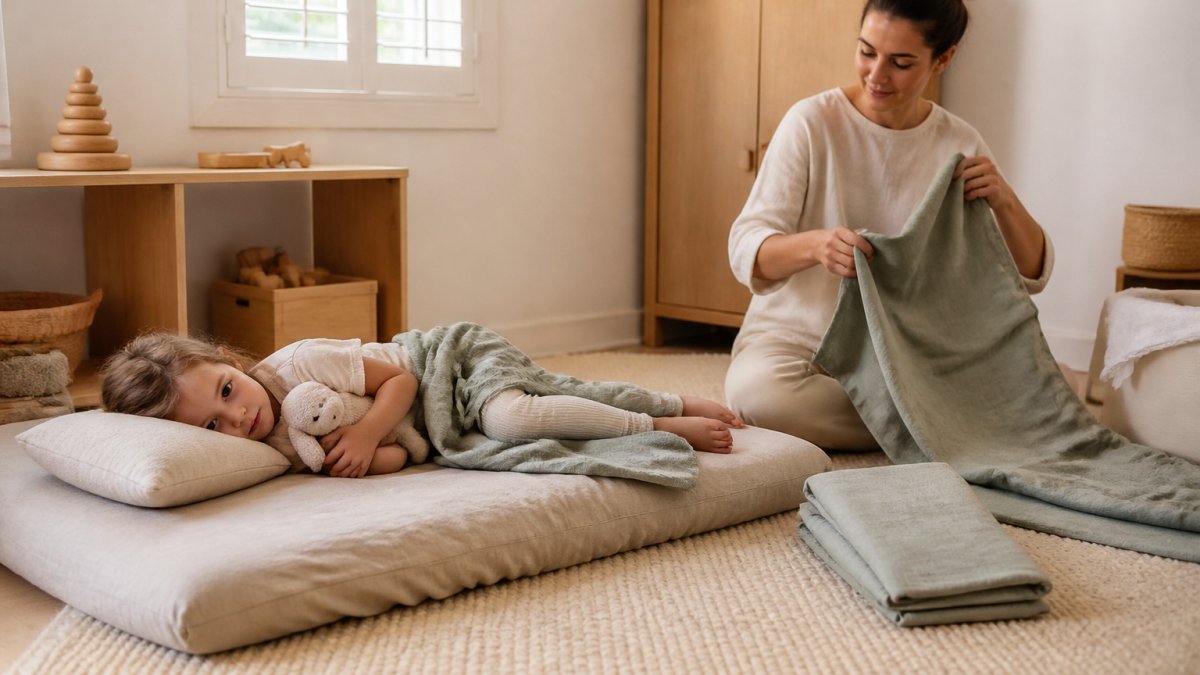
Tactile consistency is the underrated one. Children with sensory processing differences often react strongly to changes in texture, seam placement and fabric weight. A linen sleep surface that feels the same at home, at nursery and in a holiday cabin removes one variable from an already unpredictable environment. Our portable floor beds and swags are designed around that idea: the same butter-soft recycled French linen surface, wherever the child settles.
Temperature matters too. Overheating is a common trigger for sensory dysregulation, and a breathable fabric reduces the chance of a child waking uncomfortable and escalating. The difference shows up most on the second night away from home, when the novelty has worn off and the sleep environment has to do the work.
Durability: Will Recycled Linen Survive Mud, Sand and Daily Use?
Yes, recycled linen handles mud, sand and constant washing well, provided it is cared for sensibly. Linen is one of the stronger natural fibres, and recycled linen retains much of that strength because the fibre is re-spun rather than broken down chemically.
Camping trips are the real test. Sand brushes off once dry. Mud is best left to dry before brushing, then spot-cleaned rather than scrubbed. The waterproof PUL canvas backing on our swags and floor beds means a damp patch underneath does not soak straight through to whatever is beneath.
What wears linen out fastest is not dirt but heat and over-drying. Tumble drying on high heat weakens the fibre over time. Line drying or a low tumble does far less damage and keeps the fabric soft.
A common mistake is treating linen like a delicate. It is not. It takes repeated washing, it tolerates a warm machine cycle, and it comes out softer each time. The failure mode people worry about, that the fabric will fray or thin within a season, is not what happens when care instructions are followed.
| Concern | What actually happens | How to handle it |
|---|---|---|
| Sand and grit | Brushes off once dry | Shake out, brush, wash as normal |
| Mud | Sits on the surface | Let it dry, brush, spot clean |
| Repeated washing | Fabric softens, stays strong | Warm machine wash, no bleach |
| Drying | High heat weakens fibres | Line dry or low tumble |
| Spills | Absorbed then released | Blot, wash, air dry |
How to Care for Linen Bedding
Caring for linen bedding is straightforward: wash warm, skip the bleach, and dry gently. The full routine takes less effort than most parents expect.
- Shake out before washing. Sand, crumbs and grit come off easily when dry.
- Wash on a warm cycle with a mild detergent. Linen tolerates warmth well.
- Skip fabric softener. It coats the fibre and reduces breathability.
- Avoid bleach and harsh stain removers, which break down natural fibres.
- Line dry or tumble low. High heat is the main cause of premature wear.
- Fold while slightly damp if you want to skip ironing. Linen's natural crease is part of its character.
For nursery use, where bedding is washed constantly, this routine holds up. Two sets in rotation means one is always clean while the other airs.
Potential Drawbacks of Recycled Linen (And Why They Rarely Matter)
Recycled linen has real drawbacks, and parents deserve to hear them straight. The honest list is short, and each item has a practical answer.
It creases. Linen wrinkles, and no amount of care changes that. For bedding, this is cosmetic. The fabric is not damaged by creasing, and most parents stop noticing within a week.
It costs more than supermarket bedding. Quality recycled French linen carries a higher upfront price than a basic cotton set. What you are paying for is fibre quality, construction and the fact that the set will outlast several cheaper replacements. Current pricing is on our product pages, and delivery is free Australia-wide.
It feels firm at first. New linen is crisper than washed linen. A few washes solves it.
Supply can be limited. Recycled fibre depends on available reclaimed material, so colourways and stock can vary. If you see a set you want, it is worth ordering rather than waiting.
It is not stain-proof. Linen handles spills well but is not impervious. Prompt blotting and washing keeps marks from setting.
None of these drawbacks undermines the core case. They are the trade-offs you accept for a fabric that softens with age, breathes well and suits a child's skin.
Conclusion
Choosing bedding for a child involves more trade-offs than most parents expect, and the sensory, durability and sustainability questions rarely point in the same direction. Recycled linen is one of the few materials that answers all three at once. Our kindergarten sheet sets, kids' swags and sensory floor beds are made from butter-soft recycled French linen with a waterproof PUL canvas backing, designed on Country and built to travel. If you are weighing up a set for home, daycare or the next camping trip, browse the range and see which size suits your family.
Frequently Asked Questions
Is recycled linen safe for children?
Recycled linen is safe for children when it is produced to recognised textile standards. Look for OEKO-TEX Standard 100 certification, which tests for harmful substances, and check that any waterproof backing is a certified fabric rather than a PVC film. Linen is naturally breathable and free from the chemical finishes often applied to synthetic fabrics, which makes it a sensible choice for babies and toddlers with sensitive skin. Always wash new bedding before first use.
Is linen cooler than cotton for children?
Linen generally feels cooler than cotton because the flax fibre conducts heat away from the body and wicks moisture faster. In warm bedrooms and during summer camping trips, that means less tossing and sweating. Cotton is still a good option, but standard cotton sheeting holds moisture longer. If your child overheats easily or wakes up clammy, linen bedding is worth trying, particularly in warmer months or in caravans and tents without air conditioning.
Does recycled linen get softer with use?
Yes. Linen fibres break down slightly with each wash, which is why new linen feels crisp and older linen feels butter-soft. Recycled linen often starts softer than new linen because the fibres have already been through a previous life. Expect the fabric to relax noticeably after the first three or four washes. Wash in cool water on a gentle cycle and avoid fabric softener, which coats the fibres and slows the softening process.
How do you wash and care for linen bedding?
Wash linen in cool or lukewarm water on a gentle cycle with a mild detergent. Skip fabric softener and bleach. Line dry in shade where possible, or tumble dry on low and remove while slightly damp to reduce wrinkling. For waterproof-backed pieces, check the care label before tumble drying. A quick warm iron on the linen side smooths creases, though most linen looks fine slightly rumpled and softens further with every wash.
The hard part is not deciding that breathable, soft, durable bedding matters. It is finding a set that stays consistent wherever your child sleeps. Cozie Dozie Co. makes portable, sensory-safe sleep and play environments from recycled French linen, with a waterproof PUL canvas backing and a design built for rest and adventure alike. Shipping is free Australia-wide. Get started with Cozie Dozie Co. and give your child the same familiar sleep surface at home, at daycare and on the road.