

Last Updated: November 2, 2026
Quick Summary
Wash linen kids bedding in cold or lukewarm water on the shortest gentle cycle with half the usual mild liquid detergent, then air dry it flat or on a line in the shade. Skip fabric softener and never tumble dry on high heat, as heat is what shrinks linen.
- Wash kids' bedding once a week, or twice a week for allergies, night sweats or pets.
- Blot stains with cold water rather than rubbing, and never use hot water on fresh stains.
- Soak wee stains in cold water and white vinegar for 30 minutes before washing.
- Do not dry a stain that survives one wash, because dryer heat locks it in.
- Overloading the drum stops linen moving freely, so wash two sets at a time at most.
Table of Contents
- Why Linen Kids Bedding Needs a Different Wash Routine
- Linen Bedding Care Instructions for Busy Families
- How Often to Wash Kids' Bedding in Your Home
- How to Remove Stains from Linen Bedding
- How to Dry Linen Bedding Without Shrinking It
- Common Mistakes That Ruin Linen Kids Bedding
- Choosing Linen Kids Bedding That Survives Constant Washing
- Frequently Asked Questions
Why Linen Kids Bedding Needs a Different Wash Routine
Linen kids bedding is a different laundry job from cotton sheets, and treating it like cotton is the fastest way to ruin it. Linen fibres are strong when wet but stiff, so hot water and hard spin cycles break them down over time. Cozie Dozie Co. makes its kids' bedding from recycled French linen, and parents often ask the same question: how do I wash this without wrecking it?
Here is the good news. Linen can become softer with gentle washing. But only if you wash it kindly.
Cotton can take a hot cycle and a fast spin. Linen cannot. It needs cooler water, a gentle cycle, and slow drying. Get those three things right and your linen kids bedding is more likely to stay in good condition for longer.
Below, we break the routine into seven clear steps, from pre-wash checks to final storage.
Linen Bedding Care Instructions for Busy Families
The short version: cold or lukewarm water, a mild liquid detergent, a gentle cycle, and line dry in the shade. That is the whole linen bedding care instructions routine in one sentence.
Families with young kids do not have time for fussy laundry. So keep it simple:
- Wash separately from towels and denim
- Use half the detergent you would for cotton
- Skip fabric softener entirely
- Choose the shortest gentle cycle available
- Air dry flat or on a line, out of direct sun
A common mistake is overloading the machine. Linen needs room to move. Two sets at a time is plenty for a standard drum.
What You'll Need Before You Start
Gather these before you touch the bedding:
- A mild liquid detergent, free from bleach and brighteners
- A mesh laundry bag for the pillowcase or small covers
- A drying rack or clothesline with shade
- A soft brush for dried-on stains
- White vinegar for odour and residue
Check the care label first. Ours sits inside the cover seam. If a label says cool machine wash, believe it.
How Often to Wash Kids' Bedding in Your Home
Wash kids' bedding once a week, and twice a week if your child has allergies, night sweats, or shares the bed with a pet. That is the honest answer most guides avoid.
How often to wash kids' bedding depends on a few things:
| Situation | Wash frequency |
|---|---|
| Child sleeps in it nightly | Once a week |
| Occasional use, travel or nursery | Every 2-3 weeks |
| Allergies, asthma or eczema | Twice a week |
| Recent illness or bedwetting | Straight away |
| Camping or outdoor use | After every trip |
For a kindergarten set used daily at nursery, a weekly wash keeps it fresh without wearing it out. Linen generally handles frequent washing well when the cycle stays gentle.
How to Remove Stains from Linen Bedding
Blot, do not rub. That is the first rule of how to remove stains from linen bedding. Rubbing pushes the stain into the fibre and roughs up the surface.
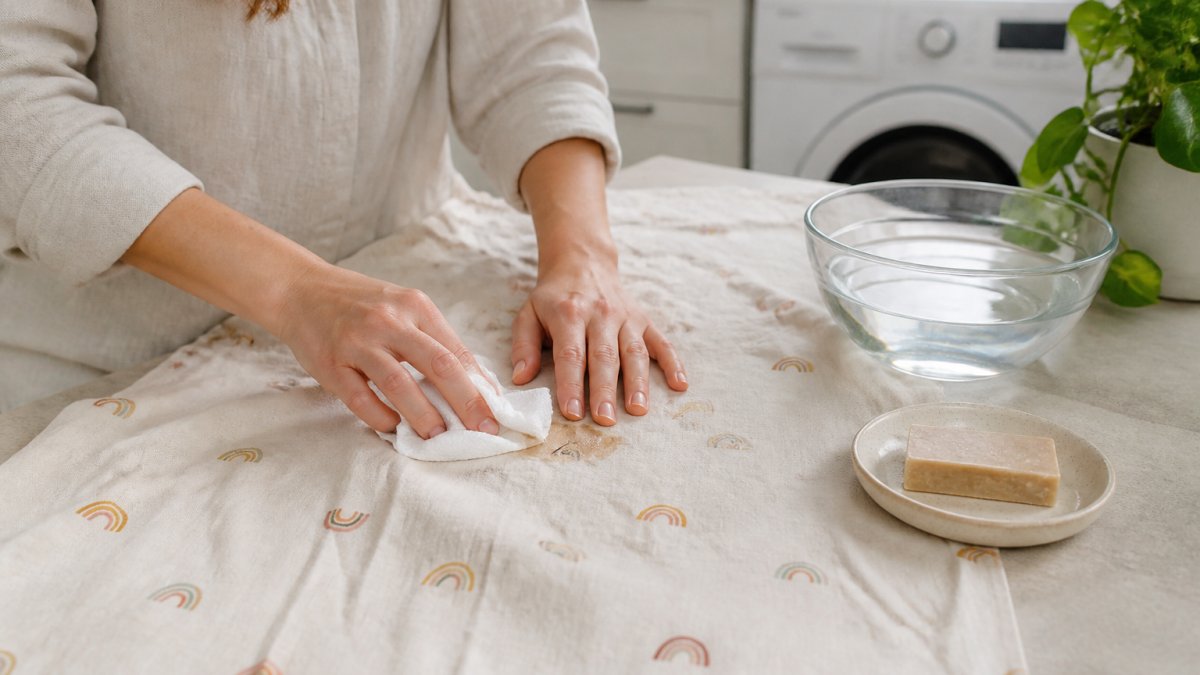
Treat stains quickly, then wash as normal. Here is a simple method:
- Scrape off any solids with a spoon
- Blot the area with a clean cloth and cold water
- Apply a small drop of mild detergent
- Let it sit for ten minutes
- Rinse with cold water before washing
Never use hot water on a fresh stain. Heat sets protein stains like wee and vomit permanently.
Stain Removal for Wee, Vomit and Food
Each stain type needs a slightly different approach:
- Wee: rinse in cold water, then soak in a mix of cold water and white vinegar for 30 minutes
- Vomit: scrape off solids, rinse cold, then wash on a gentle cycle with an extra rinse
- Food and oil: dab with mild detergent, let sit, then rinse cold before washing
- Berries and juice: stretch the fabric over a bowl and pour cold water through from the back
If a stain survives one wash, do not dry it. Heat from a dryer locks it in for good.
How to Dry Linen Bedding Without Shrinking It
Air dry linen in the shade, flat or on a line, and never tumble dry on high heat. That is the core of how to dry linen bedding without shrinking it.
Linen shrinks most in the dryer, not the wash. High heat pulls the fibres tight. Line drying in shade keeps the size stable and protects the colour.
- Shake the cover out before hanging to reduce creases
- Dry flat on a rack for the first hour, then hang
- Keep it out of harsh midday sun, which fades colour
- Use a low tumble only if you must, and remove while slightly damp
Slight creasing is normal and part of linen's texture. Do not iron it flat. A warm iron on the reverse is fine if you want a neater look.
Common Mistakes That Ruin Linen Kids Bedding
The biggest mistake is using fabric softener. It coats the linen fibres and blocks their natural breathability. Skip it every time.
Other common errors we see:
- Washing with hot water, which shrinks and stiffens linen
- Overloading the drum so the fabric cannot move
- Leaving wet linen in the machine, which causes mildew smell
- Using bleach or harsh stain sprays
- Drying in full sun, which fades colour fast
Watch out: leaving a wet linen cover bunched in the machine overnight can leave a musty smell that takes several washes to clear. Hang it out the same day.
If you want the official care guidance for your set, our help and care answers cover sizing, materials and washing in plain terms.
Choosing Linen Kids Bedding That Survives Constant Washing
When choosing linen, a tighter weave and recycled fibres are generally better suited to frequent washing.
Our sets are made from recycled French linen, and you can read more about why recycled linen suits kids before you buy.
For active families, durability matters. A set that holds up to regular washing and still feels soft can be worth more than a cheaper one you replace often. If you want to understand the fabric itself first, here is why French linen works for toddlers. And when you are ready to browse, our sensory-safe floor beds and linen covers are flat-packed and ready to fill at home. Curious about how we make them? See our circular design and recycled materials.
When shopping for linen kids bedding, it helps to weigh cost against how long it lasts. Choose wash-friendly recycled linen and follow the steps above to help your set cope with the mud, sand and spills of family life.
Washing linen for active kids is not hard, but it does ask for a gentler routine than cotton. Cozie Dozie Co.'s recycled French linen sets are made with a butter-soft finish and waterproof PUL canvas backing, and they are designed to be portable. Free shipping Australia-wide is available. Get started with Cozie Dozie Co. and give your child a familiar, calming space wherever the day takes you.
Frequently Asked Questions
What temperature should you wash linen kids' bedding at?
Wash linen kids' bedding in cool to lukewarm water, no hotter than 40°C. Hot water weakens the linen fibres over time and causes more shrinkage than a cool wash. A 30°C cycle handles most everyday soiling, and you can move to 40°C for heavier soil or illness. Always check the care label on your specific set first, and use a gentle cycle with a mild detergent to protect the weave.
Can you put linen kids' bedding in the tumble dryer?
You can tumble dry linen kids' bedding on a low heat setting, but line drying is safer for the fabric. High heat is the main cause of shrinkage and can make linen feel stiff. If you do use the dryer, take the bedding out while it is still slightly damp and smooth it flat to finish drying. This keeps the linen soft and reduces creasing without over-drying the fibres.
How do you remove stains from linen bedding without harsh chemicals?
Blot fresh stains straight away rather than rubbing, then rinse with cool water. For most stains, a paste of bicarb soda and water applied for 15 to 20 minutes lifts the mark before a normal cool wash. For oily or food stains, a small amount of mild washing-up liquid worked in gently does the job. Avoid chlorine bleach, which yellows linen, and always test any treatment on a hidden corner first.
Is linen bedding suitable for children with sensitive skin?
Linen is often chosen for sensitive skin because it is breathable and naturally moisture-wicking. Wash new linen kids' bedding before first use and choose a mild, fragrance-free detergent to reduce irritation. Avoid fabric softener, which coats the fibres and can trap residue. Rinsing well and line drying in fresh air keeps linen comfortable against the skin.
