

Last Updated: November 21, 2026
Quick Summary
Sustainable kids camping gear in Australia means equipment made from recycled or natural materials, built to be repaired and reused, and sized to grow with your child. Start with a waterproof sleep system, then add layers you are missing and repair before you replace.
- Eco-friendly is not a regulated term in Australia, so a label alone proves nothing.
- A child's rucksack should carry no more than roughly a tenth of their body weight.
- Children under five should never carry a knife unsupervised.
- Agree a meeting point before leaving the car and walk your child to it.
- Mount Larcom needs gear for summer heat, sudden storms and cold winter nights.
Table of Contents
- What Makes Kids Camping Gear Australia Actually Sustainable
- The Heart of the Kit: A Children's Camping Sleep System
- Sustainable Outdoor Gear for Kids: The Full Packing List
- Eco-Friendly Camping Accessories That Earn Their Place
- Safety Gear and Bush Kinder Supplies for Little Explorers
- What to Ignore When Shopping for Sustainable Kids Camping Gear
- Packing for Mount Larcom and Central Queensland Conditions
- Building Your Child's Camping Kit with Cozie Dozie Co.
- Frequently Asked Questions
What Makes Kids Camping Gear Australia Actually Sustainable
Sustainable kids camping gear in Australia starts with materials that survive real use and a supply chain you can question.
A useful definition: sustainable kids camping gear is equipment made from recycled or natural materials, built to be repaired and reused, and sized so it grows with a child rather than being outgrown in a season. That rules out a lot of cheap kit sold on price alone.
Recycled and Natural Materials That Hold Up
Linen, cotton canvas and recycled polyester are the materials that genuinely survive camping. Recycled polyester fibre is a common filling for children's bedding, and natural linen is a commonly chosen fabric for its softness.
Watch out: "eco-friendly" is not a regulated term in Australia, so a label alone proves nothing. If you want a deeper breakdown of what to look for, our eco friendly children travel products buying guide covers the criteria in full, and our guide to why recycled linen works for kids explains the durability side.
Repair, Reuse and Rental Before You Buy New
Before buying anything, check whether you can repair what you own. A split seam on a canvas base is often worth repairing rather than replacing the whole sleep system. Rental and hand-me-down schemes through local community groups stretch gear further, and they suit families whose children are between sizes.
The Heart of the Kit: A Children's Camping Sleep System
A children's camping sleep system is the layer between your child and the ground, and it decides whether the whole trip works. Get the sleep right and everything else follows.
Why Sleep Is the First Thing to Get Right
Cold, damp ground wakes children faster than any noise. A waterproof base layer and a familiar surface do more for a settled night than an expensive sleeping bag.
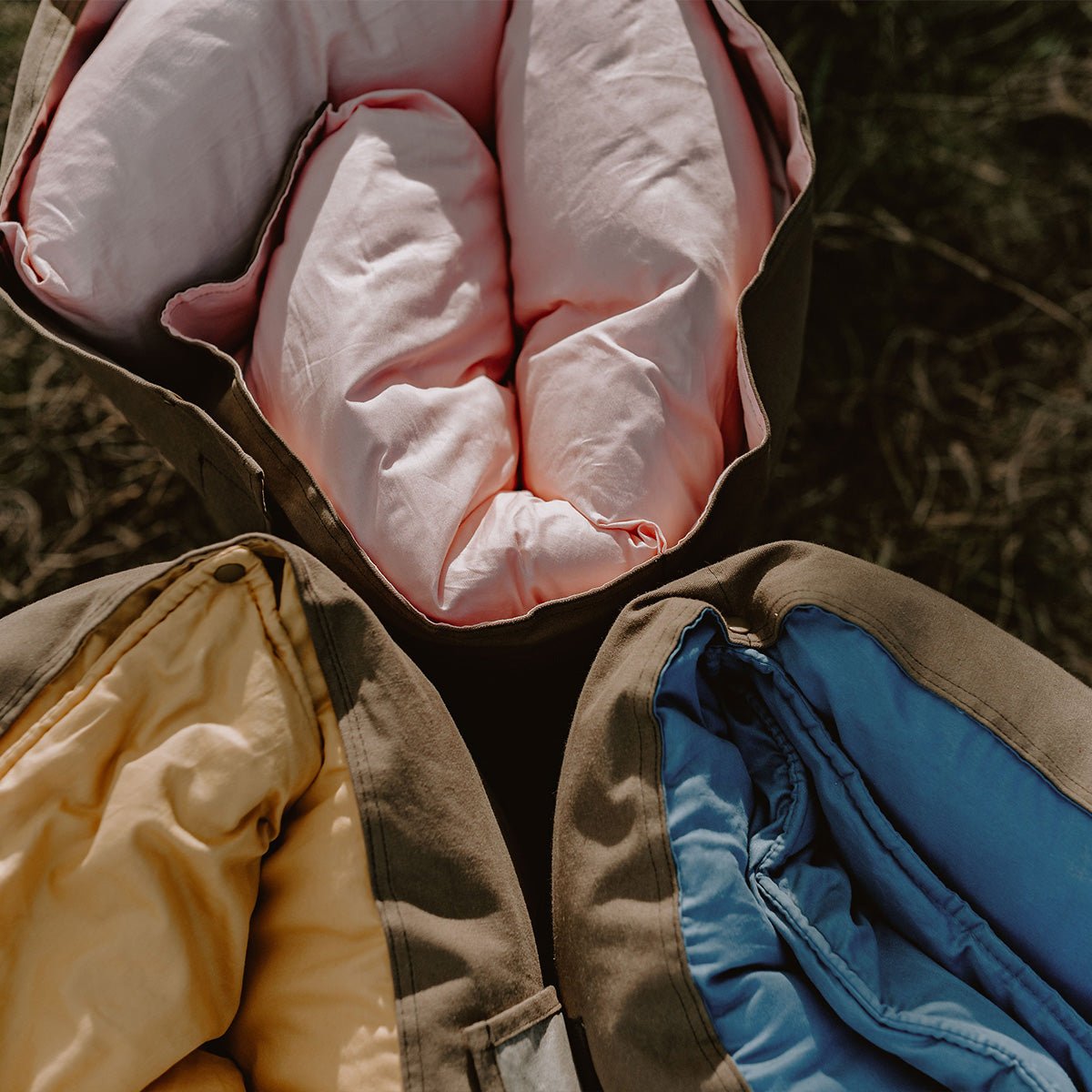
Our own approach uses a pocket-style lounger: a flat-packed cover you fill with pillows or foam at home, topped with a butter-soft recycled French linen sheet and backed with waterproof PUL-lined canvas.
Choosing the Right Size and Age Range
Match the sleep surface to the child, not to the tent. If you are weighing up formats, our portable kids bed buying guide walks through the measurements that matter.
| Option | Length | Age guide | Best for |
|---|---|---|---|
| Single pocket-style Joey | 150 cm × 66 cm | 2+ years | One child, tent or kindy rest |
| Double-length Buck | 3 m | Bigger kids, teens, adults | Siblings sharing, family camping |
Best for: families who camp several times a year and want one surface that works at home and away. Skip if: your child is still in a cot and needs full containment overnight.
Sustainable Outdoor Gear for Kids: The Full Packing List
Sustainable outdoor gear for kids comes down to a short list of items that do real work. Here is the packing list we would build for a Central Queensland trip, with the sizing and material detail that most collection pages leave out.
Clothing, Rainwear and Weather Protection
Layer rather than buy thick. A merino base layer, a fleece mid-layer and a waterproof shell handle everything from a cold Mount Larcom morning to a hot afternoon.
Rainwear should be seam-sealed and roomy enough to go over a fleece.
Size for growth without drowning the child: a jacket one size up works over layers, but trousers that are too long become a trip hazard on rocks.
Backpacks, Headlamps and Carrying Gear
A child's rucksack should sit at hip height with a chest strap, and carry no more than roughly a tenth of their body weight. For a 20 kg child that is about 2 kg loaded, which is less than most families pack.
Headlamps beat hand torches because they leave both hands free around a campfire.
For bag options, see our roundup of kids travel bags for outdoor adventures.
Footwear, Sun Protection and the Small Items
Closed shoes with a grippy sole are non-negotiable on rocky ground, and they should be worn in before the trip rather than straight out of the box. A wide-brim hat with a chin strap stays on in wind; a cap does not protect the neck.
The small items earn their place: a mesh bag for wet clothing, a compact towel that dries overnight, and a named water bottle the child can refill independently.
Eco-Friendly Camping Accessories That Earn Their Place
Eco-friendly camping accessories are the items that replace single-use plastic without adding weight. Reusable stainless-steel drink bottles, a refillable water container, mesh produce bags and a small repair kit cover most needs.
Watch out: solar lanterns and rechargeable headlamps often fail on the second trip if they are cheap. A vacuum-sealed bottle is a practical way to keep water cold through a hot afternoon.
Safety Gear and Bush Kinder Supplies for Little Explorers
Safety gear for little explorers should be small, visible and understood by the child.
The Child's Own Safety Kit
A basic kit covers a whistle on a lanyard, a compact first-aid pouch, a high-vis vest and a printed card with a parent's phone number.
The first-aid pouch should be small enough that the child will actually carry it, and it should contain only what they are trained to use: plasters, a cleaning wipe and a bandage.
Age-Appropriate Supervision and Tools
Children under five should never carry a knife unsupervised, and most outdoor education programmes do not introduce whittling until the early primary years. Whittling knives and fire starters belong only in supervised sessions with a leader, and only where the program supplies them. A common pattern in bush kinder programmes is a designated tool area with one adult per small group, and a rule that the tool is returned to the leader rather than carried around.
Fire lighting follows the same logic. A child can help gather tinder and watch the mechanism, but striking a match or using a ferro rod should happen with an adult's hand over theirs until the child is old enough to manage the risk. Check the program's supervision ratios before you enrol, and ask what qualifications the leaders hold.
Bush Kinder and Outdoor Education Supplies
Bush kinder and outdoor education programmes usually ask families for a sun-safe hat, closed shoes, a water bottle and a change of clothes.
Ask the program what it supplies before you buy anything, so you do not duplicate gear it already provides. If the program runs through winter, an insulated mat for sitting on cold ground is worth more than another jumper.
Emergency Planning for Family Camps
On a family camp, agree a meeting point before you leave the car and walk the child to it. Give older children a map or a phone if the site has coverage, and check coverage before you rely on it, because many Central Queensland campsites have none.
Watch out: a high-vis vest only helps if the child keeps it on, so choose one they will wear and put it on before dusk rather than after.
What to Ignore When Shopping for Sustainable Kids Camping Gear
Ignore vague green badges and unverifiable claims. A logo on a swing tag is not proof of anything unless the certifying body is named.
Three things to skip:
- "Eco" as a standalone word. It means nothing without a named material or certification.
- Bundles that duplicate what you own. Buy the piece you lack, not a full set.
- Gear sized for one season only. It costs more over three years than one durable item.
Packing for Mount Larcom and Central Queensland Conditions
Mount Larcom sits in Central Queensland, where summer heat, sudden storms and cold winter nights all arrive in the same year. Pack for all three.
Practical adjustments for the region:
- Heat: shade cloth, wide-brim hats and a bottle that keeps water cold.
- Storms: a waterproof ground layer under every sleep surface, and dry bags for clothing.
- Winter nights: an insulated mat under the sleep system, because the ground pulls warmth faster than the air.
- Insects: screen mesh for the tent and repellent applied before dusk.
If you are looking for sustainable kids camping gear near me in the Mount Larcom area, start with the sleep layer and build outward. It is the item that decides the trip.
Building Your Child's Camping Kit with Cozie Dozie Co.
We build our range around one idea: a child rests better on a surface they recognise, wherever the family travels.
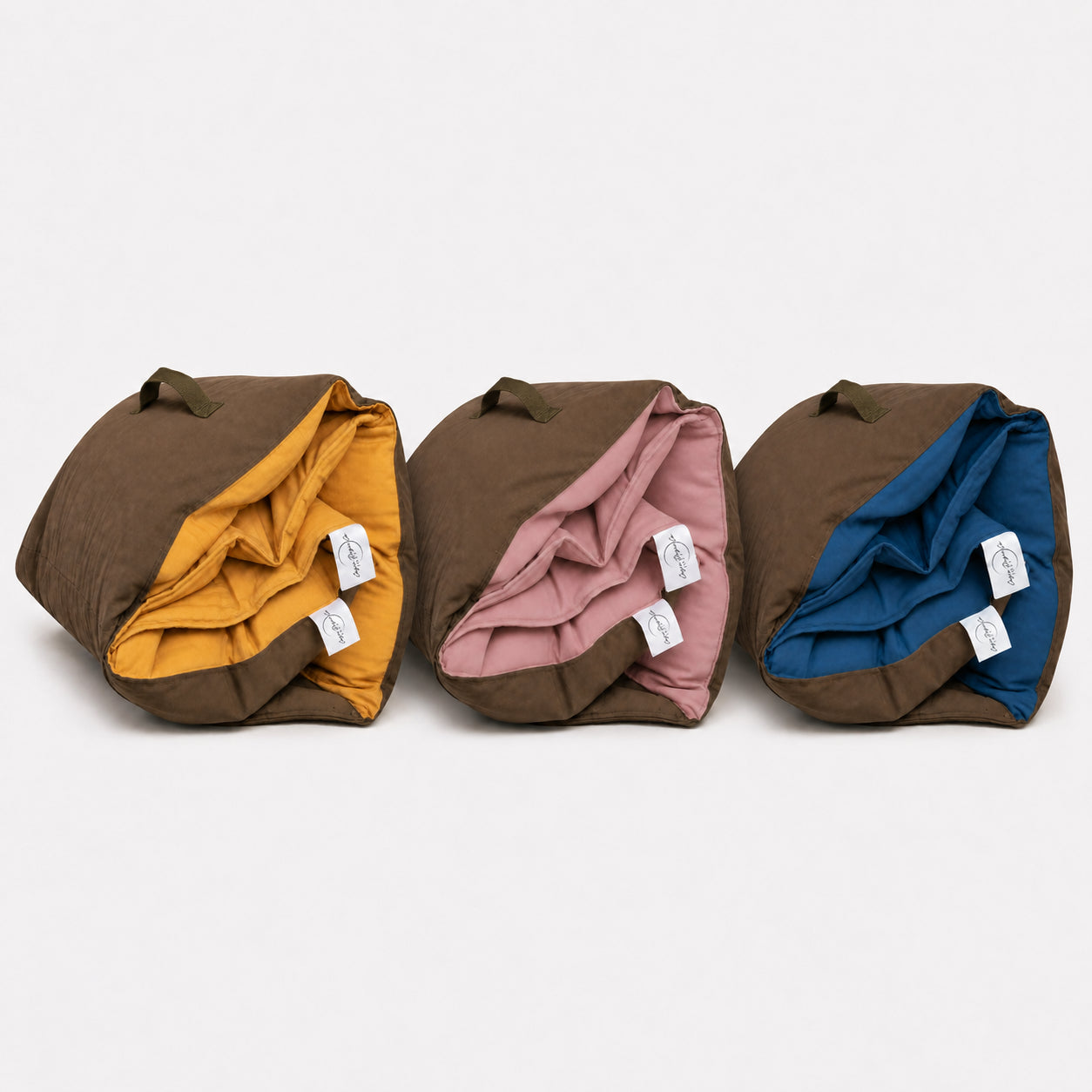
You can view the pocket-style Joey in three colourways, or pair it with a 27oz vacuum-sealed bottle that keeps water cold through a Queensland afternoon. Free shipping applies Australia-wide.
Start with the sleep system, add the layers you are missing, and repair before you replace. That is the whole method.
The challenge is not finding gear; it is choosing the few pieces that will survive your family's next five years of trips. We make that easier with a portable, sensory-safe sleep surface built from recycled French linen, a waterproof canvas base, and a design that packs flat into the car. Get started with Cozie Dozie Co. and give your little explorer a familiar place to rest, from Mount Larcom to the coast.
Frequently Asked Questions
What camping gear do children actually need in Australia?
Start with a reliable sleep system, then build outwards. A child needs a sleeping surface with insulation from the ground, a warm layer, weather protection, a headlamp, a water bottle and a small pack they can carry themselves. In Australia, sun protection and insect repellent matter as much as warmth. Keep the list short for the first trip and add pieces as you learn what your family uses. Buying fewer, better items and repairing them beats replacing cheap gear every season.
Is recycled fabric suitable for children's camping bedding?
Yes, provided the fabric is soft against skin and the backing handles damp ground. Recycled French linen is a butter-soft fabric, which suits children who sleep on the same surface night after night. Look for a waterproof backing such as PUL-lined canvas so morning dew and damp grass do not soak through. Check that covers are removable and machine washable, because bedding for kids needs washing far more often than adult gear.
How do I choose a safe sleeping setup for a child while camping?
Keep the sleep surface flat, firm and away from tent walls and heater sources. Children aged two and over can use a low lounger or swag-style bed, but check the manufacturer's age guidance first. Avoid loose blankets around very young children, and dress them in layers rather than relying on bedding alone. Position the bed away from the tent door where condensation collects, and test the setup at home for one night before you rely on it on a trip.
How can I make a family camping trip more eco-friendly?
Swap disposable plates and cutlery for reusable sets, pack water in refillable stainless bottles instead of buying plastic, and take rubbish home rather than burning or burying it. Choose gear made from recycled or natural materials and repair it rather than replacing it. Plan meals to limit food waste, use rechargeable headlamps and torches, and stick to marked campsites so ground cover recovers. Small repeated choices across a trip add up more than one expensive purchase.
How do I choose durable camping gear for children that will last?
Check three things: the backing material, the stitching at stress points, and whether covers come off for washing. Gear that children drag through mud and sand needs a water-resistant base and a washable top layer. Ask how the item is filled and how it is cleaned before you buy.
