

Last Updated: October 30, 2026
Quick Summary
The best kids sleep environment for travel is one that matches home, not the destination. Bring the same bedding, dim light and wind-down order, and control the three factors you can actually manage: light, noise and temperature. Safety comes first, so babies under twelve months still need a firm, flat surface with no loose bedding.
- For babies under twelve months, the Red Nose safe sleeping guidelines still apply away from home.
- A breathable blackout cover or dark inner room is the single most useful tool you have.
- A portable white noise machine or a fan masks unpredictable sounds better than silence does.
- Keep the order of your bedtime routine and let the timing drift instead.
- Get everyone into morning light early and move meals to the new local time to ease jet lag.
Table of Contents
- Why a Familiar Sleep Environment Matters More Than the Destination
- Building a Safe Sleep Environment for Babies Away from Home
- Light, Noise and Temperature: The Three Factors You Can Actually Control
- Toddler Sleep Away from Home: Familiarity Beats Novelty
- Keeping the Kids' Bedtime Routine on Holiday Without Being Rigid
- Kids' Sleep and Jet Lag: Realistic Timelines and Gentle Resets
- What to Look For in Portable Bedding and Sleep Spaces
- Choosing Your Portable Sleep Setup for the Next Trip
- Frequently Asked Questions
Why a Familiar Sleep Environment Matters More Than the Destination
Most parents plan the trip and forget the sleep. Then the first night away goes badly, and the whole holiday shifts. The truth is that what is the best kids sleep environment for travel has very little to do with the destination and almost everything to do with sameness. Children sleep better when the cues around them match home: the same bedding, the same dim light, the same wind-down order. A new room, a new smell, a new bed, and a new noise all at once is a lot to ask of a small nervous system. Families across the country often report this. The parents who cope best are not the ones who booked the quietest cabin. They are the ones who packed the familiar.
Building a Safe Sleep Environment for Babies Away from Home
Safety comes before comfort, and it comes before familiarity. For babies under twelve months, the safe sleep rules do not change because you are in a tent or a hotel room. The Red Nose safe sleeping guidelines set out the basics: baby on their back, on a firm flat surface, with no loose bedding, pillows or soft toys near the face. A portable sleep space should be firm, flat, and free of gaps around the edges. Watch out: a soft mattress topper that feels cosy at home can be a suffocation risk for a baby, so keep the sleep surface firm even when you are chasing comfort. If your child is sensory-sensitive and you are weighing up specialist travel bedding,
Light, Noise and Temperature: The Three Factors You Can Actually Control
You cannot control a campground at dusk or a hotel corridor at midnight. You can control three things, and they matter more than most parents realise. Light tells the body when to wake and when to settle, so a dark sleep space is the single most useful tool you have. A breathable blackout cover or a dark inner room helps a lot. Noise is the second lever: a portable white noise machine or a fan masks unpredictable sounds far better than silence. Temperature is the third. Nights can swing in temperature, and a child who is too hot or too cold will wake. Dress them in layers you can peel off, and check the back of the neck rather than the hands. Nail these three and you have done most of the work.
Three factors are within your control, and they do most of the work.
| Factor | Why it matters | What to do |
|---|---|---|
| Light | Tells the body when to wake and settle | Use a breathable blackout cover or dark inner room |
| Noise | Masks unpredictable sounds better than silence | Use a portable white noise machine or a fan |
| Temperature | A child too hot or too cold will wake | Dress in layers and check the back of the neck |
Toddler Sleep Away from Home: Familiarity Beats Novelty
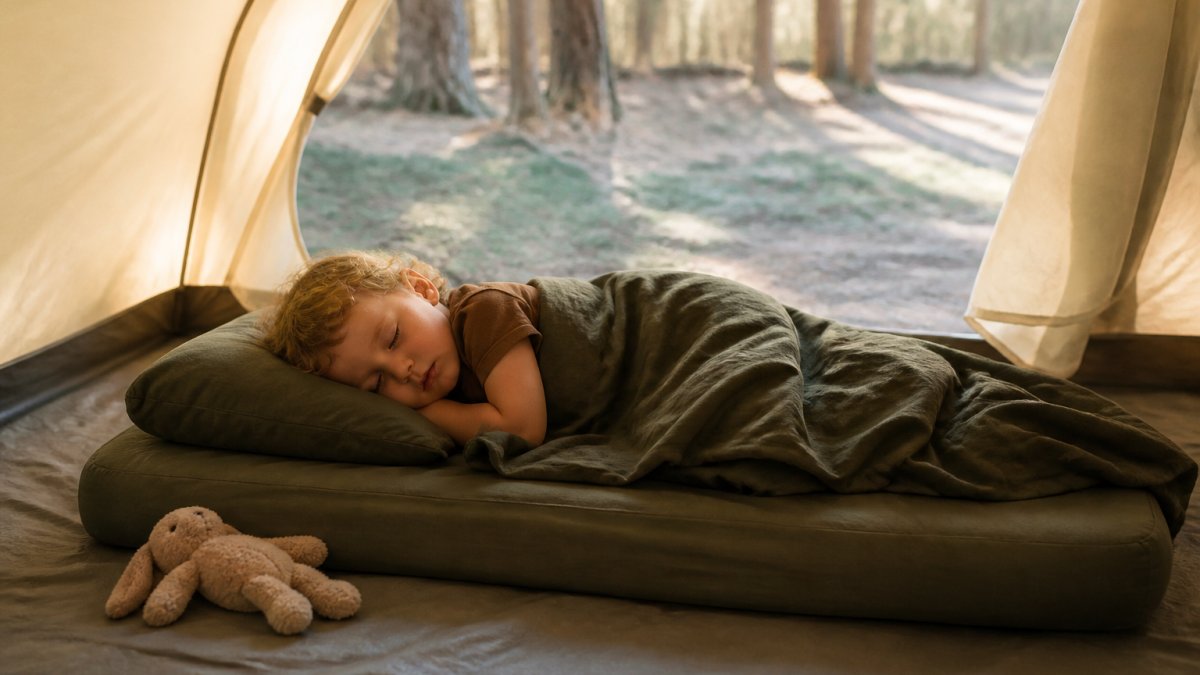
Toddlers are the hardest age to move. They know what they like, and they will tell you loudly when the new bed is not it. The fix is not a stricter routine. It is a familiar sleep space that travels. A familiar sleep space that travels can help a toddler settle more easily than unfamiliar surroundings. In practice, this means bringing the same pillow, the same blanket, and the same bedtime order, even if the room around them is completely different.
Keeping the Kids' Bedtime Routine on Holiday Without Being Rigid
A holiday routine should bend, not break. Keep the order of events and drop the clock. The bath, the book, the song, the lights down: that sequence is the signal, not the exact time it happens. Holding the order steady while letting the timing drift can help keep a kids' bedtime routine on holiday working. Here is a simple version we would use:
- Same wind-down order every night, even if it starts later
- One familiar comfort item within reach
- Screens off at least an hour before bed
- Dim the space before the last story, not after
- Say goodnight the same way you do at home
The rigidity is what causes tears. The sameness is what does the work.
Kids' Sleep and Jet Lag: Realistic Timelines and Gentle Resets
Jet lag in children is real, and it rarely resolves in a day. Every child is different, and adjustment times vary. Gentle resets work better than force. Get everyone into morning light as soon as possible, keep meals on the new local time, and let the first few nights be a little messy. For kids' sleep and jet lag, the trick is to shift the whole day, not just bedtime. Move breakfast, move outdoor play, move the nap. Light and food are the two strongest signals you have, and both are easier to move than a tired, cranky child at 9pm.
What to Look For in Portable Bedding and Sleep Spaces
The best portable sleep setup is one that is safe, familiar, and easy to pack. Look for these before you buy:
- A firm, flat sleep surface for babies, with no gaps around the edge
- Breathable, natural fabrics that do not trap heat
- A waterproof backing so a spill does not end the night
- A washable cover you can clean between stops
- A size that fits your car and your tent, not just your hallway
- A design your child recognises, so it feels like theirs
What most guides miss is that portability and safety pull in opposite directions. A bed that folds down to nothing is often too soft or too flimsy for a baby. A bed that is firm and safe is often bulkier to pack. The right answer depends on your child's age and how you travel. If you are comparing options, our guide to the best portable sleep solutions for toddlers compares the main types. For practical questions about sizing, filling and care, our family help page answers the ones we get most often.
Choosing Your Portable Sleep Setup for the Next Trip
Start with your child, not the catalogue. A baby needs a firm, flat, safe surface above all. A toddler needs familiarity and a space that feels like theirs. A preschooler who uses the same setup at nursery and on the road needs something that survives constant washing and daily use. Match the setup to the child, then check it against your car, your tent and your budget. For a practical checklist of what to check before you commit, read our portable kids bed buying guide. When you are ready to browse, Cozie Dozie Co. offers portable, sensory-safe children's sleep and play products made from recycled French linen, flat-packed for convenience. We offer free shipping Australia-wide, so the setup that works at home can come with you.
The hard part is not finding a bed that packs down. It is keeping the sleep cues your child relies on when everything else has changed. Cozie Dozie Co. builds portable, sensory-safe sleep spaces from butter-soft recycled French linen with a waterproof PUL canvas backing, flat-packed so they travel easily. If you want a sleep setup that comes with you, get started with Cozie Dozie Co. and give your child the same calm space, wherever the trip takes you.
Frequently Asked Questions
What is the best sleep environment for a child when travelling?
The best kids sleep environment for travel recreates the key signals of home: the same bedding, the same sleeping bag or blanket, a similar level of darkness and a familiar bedtime sequence. Bring a portable sleep space your child already knows, block out light with a travel blackout cover, and keep white noise consistent. Familiarity reduces the novelty that keeps children alert, which is why a linen floor bed or swag they have slept on before often settles them faster than an unfamiliar hotel cot.
Is a travel cot or a portable floor bed better for a toddler?
It depends on your child's age and temperament. Travel cots suit babies and young toddlers who are used to being contained, but older toddlers often resist them because they feel restrictive and unfamiliar. A portable floor bed sits low to the ground, feels like the bed at home and lets a child self-settle, which helps with toddler sleep away from home. Whichever you choose, set it up at home for a few nights before you travel so it is not brand new on arrival.
How can I help my child adjust to a different time zone?
Shift gradually rather than all at once. Two or three days before flying, move bedtime 15 to 30 minutes toward the destination time, and do the same with meals and naps. On arrival, get everyone outside in morning daylight, which is the strongest signal for resetting the body clock. Keep the kids' bedtime routine on holiday as close to normal as possible, and expect a few disrupted nights. Individual adjustment times vary.
How do I create a safe sleep environment for babies while travelling?
Follow the same safe sleep principles you use at home, wherever you are. A baby should sleep on a firm, flat surface with a fitted sheet, on their back, with no loose bedding, pillows or soft toys in the sleep space. If you are using a portable cot, check it is assembled correctly and the mattress sits flat with no gaps. Keep the sleep area away from heaters, cords and open windows, and remember that bedding designed for older children is not suitable for babies under twelve months.
