

Last Updated: 4 November 2026
Quick Summary
Wash daycare bedding at least once a week, and after every use if your child attends daily, using a warm wash around 40°C unless the care label allows hotter for soiled or illness-affected items. Wash each child's bedding separately in its own labelled bag, pre-treat stains, and dry it fully before returning it to the centre.
- Families usually take bedding home to wash while the centre stores it and sets the rules.
- Label every item with your child's name and use a separate laundry bag per child.
- Pre-treat stains with detergent and rinse protein stains in cold water first.
- Load the drum loosely, no more than about two-thirds full, so it rinses properly.
- Air-dry bedding in direct sun and check thick seams for dampness before storing.
Table of Contents
- Who Is Responsible for Washing Daycare Bedding?
- How Often to Wash Daycare Bedding
- How to Wash Daycare Sheets: A Step-by-Step Method
- How to Clean Soiled Daycare Bedding
- What a Childcare Bedding Washing Policy Should Cover
- Preventing Cross-Contamination and Keeping Bedding Separate
- Washing Daycare Bedding in Mount Larcom: Humidity, Line Drying and Fabric Care
- Choosing Bedding That Survives the Wash Cycle
- Frequently Asked Questions
Who Is Responsible for Washing Daycare Bedding?
In most Australian childcare centres, families take bedding home to wash. The centre stores it, the family launders it. This guide explains how to wash daycare bedding safely.
That split matters. Centres set the rules. Families do the work. And the quality of the wash sits with whoever loads the machine.
Daycare bedding is the sheets, blankets, pillows and sleep mats a child uses at rest time. It is not the same as centre-owned furniture, which staff usually clean.
The exact policy varies by service. Some centres ask for a named sheet set and blanket. Others provide a sleep mat and ask you to cover it. Ask your centre for its written policy before you buy anything.
What Australian Childcare Centres Usually Ask of Families
Most services follow a simple pattern:
- Named bedding: every item labelled with your child's name
- A bag per child: a separate laundry bag for storage and transport
- Weekly washing: bedding sent home at the end of each week
- Wash and return: you launder it and bring it back clean
- Extra washes after illness: bedding sent home if a child is unwell
The Australian Children's Education and Care Quality Authority oversees the National Quality Framework that guides how services manage hygiene. Individual centres decide the details.
How Often to Wash Daycare Bedding
Wash daycare bedding at least once a week, and after every use if your child attends daily. Some ask for it more often for children who sleep on the floor or use shared rest areas.
A practical rhythm looks like this:
| Situation | Washing frequency |
|---|---|
| Weekly daycare use | Once a week |
| Daily daycare use | Twice a week |
| After illness | Immediately, then again after recovery |
| Visible soiling | Straight away, separate load |
| Shared or borrowed bedding | After every single use |
The weekly routine is the baseline most families follow. Treat it as the minimum, not the target.
How to Wash Daycare Sheets: A Step-by-Step Method
Here is a complete home washing sequence for a standard machine wash, from sorting to storage.
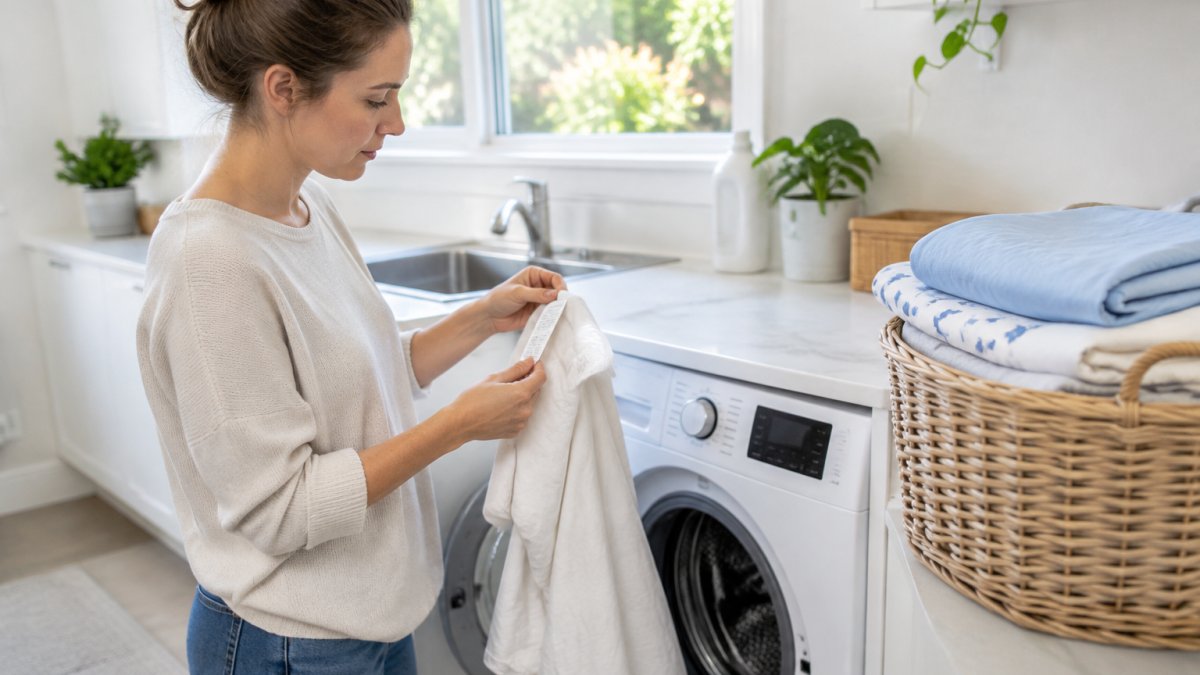
What you'll need:
- A separate laundry bag for each child
- A mild, low-fragrance detergent
- A stain pre-treatment (detergent or a dedicated stain remover)
- A washing machine
- A clothes horse, washing line or dryer
Step 1: Sort and read every care label. Empty the bag outside and shake off sand and crumbs.
Step 2: Separate by fabric and colour. Wash your child's bedding separately from towels, nappies and adult clothing.
Step 3: Pre-treat stains by type. Rub a small amount of detergent into the mark and leave it for five minutes. For protein stains (vomit, milk, blood), rinse in cold water first, hot water sets protein. For food and paint, a warm detergent soak works better. Do not use chlorine bleach on coloured linen or on anything with an elastane component; oxygen-based bleach is gentler if the care label permits it.
Step 4: Load loosely. Do not cram the drum.
Step 5: Choose the cycle and temperature. Use a warm wash (around 40°C) for everyday bedding.
Step 6: Dose detergent correctly. Follow the dose on the bottle for your machine type and water hardness.
Step 7: Run a full cycle. Let the machine finish completely, including the rinse and spin.
Step 8: Dry fully, then check. Air-dry in sun where possible.
Choosing Detergent and Wash Temperature
Use a mild, low-fragrance detergent for children's bedding. Strong detergents and fabric softeners can irritate sensitive skin, and softener coats fibres in a way that reduces absorbency in cotton and linen.
Warm water handles most everyday washes. Hot water suits soiled or illness-affected bedding, but only if the care label permits it. Cold water is gentler on fabric and fine for light refresh cycles.
Watch out: hot water can shrink natural linen and fade colours, and it can degrade the waterproof backing on mattress protectors. When in doubt, drop the temperature and increase the wash time instead.
Drying and Storing Bedding Between Uses
Dry bedding completely before it goes back in the bag. Damp fabric grows mildew fast, and that smell is hard to shift.
Colour of Country Collection Joey filled - Four Brand-New Pillows. made →
- Air-dry in direct sun when you can
- Use a dryer on low only if the care label allows
- Store in a clean, dry bag, not a plastic bag that traps moisture
- Keep each child's bag separate and labelled
Our how can we help your family page covers the official care instructions for filling and looking after your bedding at home.
How to Clean Soiled Daycare Bedding
Clean soiled daycare bedding in a separate load, away from other family washing. Rinse off solids first, then wash on the hottest cycle the care label allows.
Handle soiled items with care. Wear gloves if there is blood or vomit. Bag the item before it goes in the car so nothing transfers to other surfaces.
- Rinse in cold water first to lift protein stains
- Pre-treat with detergent, not bleach
- Wash separately from towels and clothing
- Run a second rinse if the smell lingers
- Dry fully in sun before returning it
If your centre has a specific procedure for soiled bedding, follow theirs. Many services ask you to keep the item home until it is fully clean and dry.
What a Childcare Bedding Washing Policy Should Cover
A good childcare bedding washing policy answers five questions in plain language:
- Who washes what: centre-owned or family-owned items
- How often bedding goes home
- How items must be labelled and bagged
- What to do after illness or soiling
- What the centre does if bedding arrives dirty
Ask for the policy in writing. If it is unclear, ask staff directly. A written policy protects everyone and removes guesswork on busy mornings.
What Australian Guidance Actually Requires, and What It Doesn't
It helps to understand the scope of Australian childcare hygiene expectations. The Australian Children's Education and Care Quality Authority oversees the National Quality Framework, which includes quality areas covering health, hygiene and physical environment. The framework sets outcomes and requires services to have policies and procedures, it does not prescribe a single washing temperature or a universal bedding frequency. Those details are set by each service's own policies, which is why two centres in the same town can ask for different routines.
A common pattern in Australian services is a written policy that covers:
- Named bedding and a separate bag per child, usually a fabric or washable bag, not a plastic supermarket bag
- A stated send-home day, often Friday, with return on the next attendance day
- A wash-and-return expectation, families launder and return clean bedding
- An illness clause, bedding sent home immediately after vomiting, diarrhoea or a febrile illness, and again after recovery
- A soiling clause, soiled items bagged and kept home until fully clean and dry
- A storage rule, clean bedding stored apart from bags awaiting washing
If your centre's policy is silent on a point, ask. A written answer by email is useful if a dispute ever arises.
Balancing Hygiene with Skin Sensitivities
If your child has eczema, psoriasis or a diagnosed detergent sensitivity, tell the centre in writing and ask what detergent and wash routine they expect. Most services will accept a fragrance-free, dye-free detergent and an extra rinse if you supply the product or a note from your child's health professional. Do not assume the centre's standard wash suits your child, residue from standard detergent is a common trigger, and a second rinse is a simple fix.
Where to Find Authoritative Guidance
For general hygiene expectations, the National Quality Framework and your service's own policies are the starting points. Your state or territory health department publishes childcare hygiene guidance that services often reference. If you are unsure whether a practice is a legal requirement or simply a centre preference, ask the service to point you to the source. That distinction matters: a centre can set stricter rules than the national framework, but it should be able to explain why.
Preventing Cross-Contamination and Keeping Bedding Separate
Keep each child's bedding in its own labelled bag. Never let two children share a pillow or blanket, even for one rest time.
This is the simplest defence against cross-contamination. Germs travel on fabric, hands and shared surfaces. A named bag per child stops bedding from mixing in storage.
- Label the bag, not just the sheet
- Store bags apart, not piled together
- Wash hands after handling soiled bedding
- Keep clean and dirty bags separate in the car
Centres usually manage shared equipment like sleep mats and cots with their own cleaning schedule. Your job is the fabric you send in.
Washing Daycare Bedding in Mount Larcom: Humidity, Line Drying and Fabric Care
Line drying is still the best option here.
- Hang bedding in the morning, not late afternoon
- Use a covered line or veranda during wet spells
- Bring items in before evening dew settles
- Check thick seams and hems for dampness before storing
- Rotate between line drying and a low dryer in humid weeks
Fabric choice matters as much as washing routine.
Choosing Bedding That Survives the Wash Cycle
Our Colour of Country Collection is made from recycled French linen and is flat-packed for convenience. If you want to compare options before buying, our guide to the best daycare bedding sets covers what to look for, and the case for recycled linen for kids explains why the fabric lasts.
For a deeper wash routine, our step-by-step guide to cleaning linen kids bedding without shrinking it walks through the full process.
Best for: families who want bedding that handles weekly washing without losing shape. Skip if: you need a centre-supplied sleep mat rather than a fabric set.
Frequently Asked Questions
How often should daycare bedding be washed?
Most Australian childcare centres expect bedding to be washed at least once a week, and many ask for it more often during illness outbreaks or hot weather. A practical rule is to wash sheets weekly and immediately after any visible soiling, vomit or illness. If your child attends five days a week, consider sending two labelled sets so one is always clean while the other is in the wash.
What temperature should you wash daycare sheets at?
Check the care label first. For cotton and linen sheets, a warm wash around 40°C is usually enough for routine cleaning, while 60°C is commonly used after illness or heavy soiling. Hotter water cleans more thoroughly but can shrink or fade some fabrics, so match the temperature to the care label and the level of contamination rather than defaulting to the hottest setting every time.
Can daycare bedding be washed with other laundry?
Yes, provided it is bagged separately on the way home and not mixed with heavily soiled items such as nappies or cleaning cloths. Wash your child's bedding with similar colours and fabrics, and avoid overloading the machine so detergent and water can move through the fabric. If a child has been unwell, wash that bedding on its own cycle to reduce the chance of contamination spreading.
How should you wash daycare bedding after a child has been ill?
Handle the bedding as little as possible, tip it straight from the labelled bag into the machine, and wash it separately on the warmest cycle the care label allows, commonly 60°C. Use your normal detergent and dry the bedding completely in sunlight or a dryer before it goes back to the centre. Wash your hands afterwards, and clean the laundry basket or bag before reusing it.
Washing daycare bedding safely comes down to a routine: label it, bag it, wash it warm, dry it fully and send it back clean. If you want bedding built for that cycle, Cozie Dozie Co. makes sensory-safe sleep sets from butter-soft recycled French linen with a waterproof PUL canvas backing, flat-packed and ready to fill. Get started with Cozie Dozie Co. and give your child a familiar, comfortable rest space at daycare and beyond.
