

Last Updated: November 19, 2026
Quick Summary
The best travel sleep tips for autistic children are to keep the bedtime routine in the same order even if it starts later, build a sensory-friendly sleep space with blackout and white noise, and pack familiar items rather than new ones. Trial any new sleep aid at home at least a week before you travel.
- Keep the bedtime routine steps in the same order; the order matters more than the time.
- Block light, mask noise and layer familiar bedding over hotel sheets to reduce sensory overload.
- Build a picture-based visual schedule before leaving and leave one slot blank for something new.
- Plan a stop every 90 to 120 minutes and arrive with daylight left to show your child the room.
- After a disrupted night, protect the next bedtime rather than trying to catch up on sleep.
Table of Contents
- Why Sleep Away from Home Is Harder for Autistic Children
- Building an Autistic Children Sleep Routine While Travelling
- Creating a Sensory-Friendly Travel Sleep Environment
- Using a Visual Travel Schedule for Autistic Children
- Helping Autistic Children Sleep Away from Home: Packing Checklist
- Planning an Overnight Stay Near Mount Larcom
- What to Do After a Disrupted Night
- Choosing Portable Sleep Gear for Your Next Trip
- Frequently Asked Questions
Why Sleep Away from Home Is Harder for Autistic Children
Sleep away from home is harder for autistic children because the familiar cues that signal safety, from the smell of their own bedding to the exact sound of the hallway, disappear all at once.
This guide from Cozie Dozie Co. is for families packing the car for a road trip or a night in a country town.
The core problem is predictability, not the bed itself. For parents weighing up specialist sensory travel bedding, our guide on whether special travel bedding is worth it for sensory kids sets out what to consider.
Raising Children Network guide to autism and sleep notes that children on the spectrum often need extra wind-down time and consistent bedtime cues to settle well.
Building an Autistic Children Sleep Routine While Travelling
Keep the bedtime routine identical in shape, even if the room is different. Same order, same steps, same voice.
A common approach looks like this:
- Bath or wash at the same time as home
- Pyjamas on in the same order
- Two books, not three
- One comfort item within reach
- Lights down, then a quiet song
What most guides miss is the order matters more than the time. A bedtime routine that runs 40 minutes later than home still works if the steps stay the same.
Autism Spectrum Australia information on routines highlights that predictable sequences help reduce anxiety for autistic children.
Creating a Sensory-Friendly Travel Sleep Environment
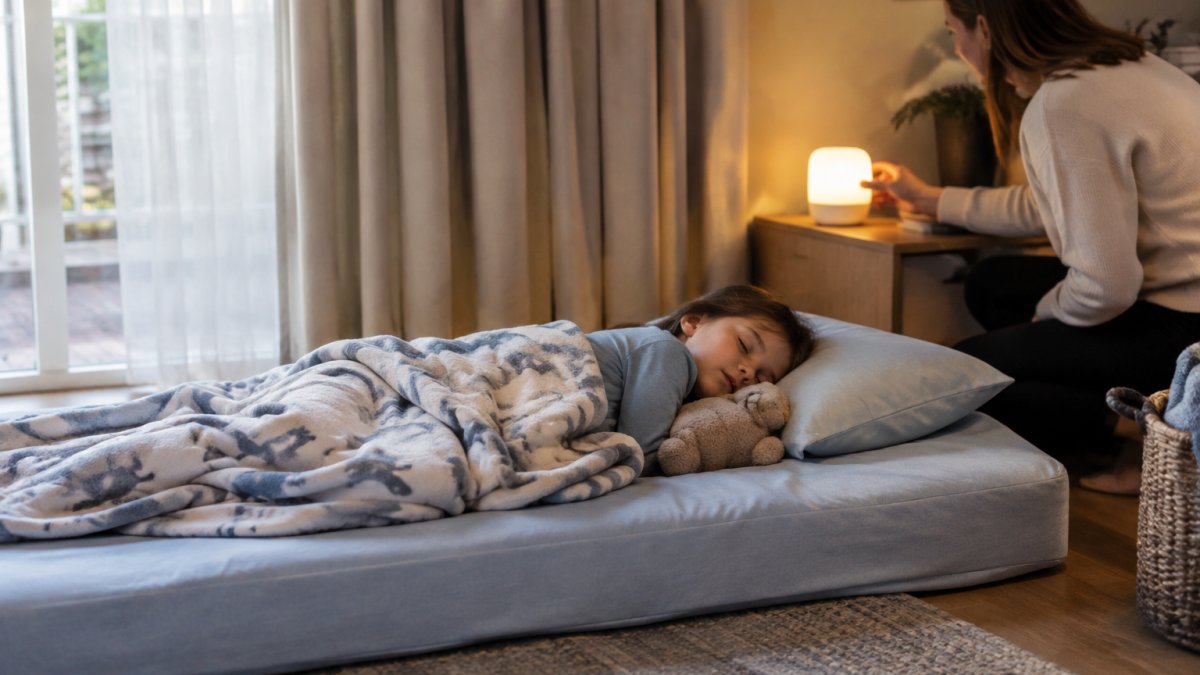
A sensory-friendly travel sleep environment is a sleep space where light, sound, texture and smell are adjusted to reduce overload before bedtime. It is built, not found.
Start with the basics:
- Block light with a portable blackout blind or a spare sheet
- Mask household noise with a white noise app or a small fan
- Layer familiar bedding over the hotel sheets
- Check the fabric texture of pyjamas and sheets, since rough linen blends can keep a sensitive child awake
- Keep the room cool, not warm
A familiar blanket, a plush toy and a portable floor bed can help make a strange room feel more like home. Our sensory floor beds are designed with a butter-soft recycled French linen top sheet.
Parents comparing travel sleep products often ask us how our Joey differs from other portable options. If you are weighing up choices, our guide on the ErgoPouch vs SlumberPod differences walks through the key trade-offs before you buy.
Using a Visual Travel Schedule for Autistic Children
A visual travel schedule for autistic children is a picture-based plan of the trip that shows what happens next, from the car ride to the motel to bedtime. It turns an unknown day into a known one.
Build it before you leave. Include:
- The route, in simple pictures
- Where you will stop for meals and snacks
- A picture of the place you will sleep
- The bedtime routine, step by step
- A picture of the trip home
Let your child help arrange the pictures. Choices reduce anxiety. So does flexibility: leave one slot blank for "something new" so surprises do not break the plan.
Helping Autistic Children Sleep Away from Home: Packing Checklist
Helping autistic children sleep away from home starts with packing the familiar, not the new.
Start by identifying which sense is most likely to keep your child awake in an unfamiliar room. A common pattern is that one sense dominates: light, sound, temperature, touch or routine. Pack for that sense first, then add the others as space allows.
If light is the main issue:
- A portable blackout blind or a dark spare sheet and removable hooks
- A warm, low-glow night light if your child needs a small light to settle
- An eye mask only if your child already tolerates one at home
If sound is the main issue:
- A white noise app on a charged phone, or a small fan
- Ear defenders only if your child uses them at home without distress
- A familiar piece of music or audiobook that matches your home wind-down
If temperature is the main issue:
- Layers rather than one thick duvet, so you can adjust without changing the routine
- The same pyjama fabric weight as home, not a heavier winter set
- A small thermometer if your child notices room temperature
If touch is the main issue:
- The familiar blanket or duvet cover, washed in the same detergent as home
- Two pairs of pyjamas in the usual fabric, plus one spare
- A plush toy or comfort item that already smells of home
- A portable bed with a consistent, soft top sheet, so the feel is the same night after night
If routine is the main issue:
- A printed and laminated visual schedule
- The same books, in the same order, used for wind-down at home
- A simple sleep diary page for each night
A practical essentials list for most families looks like this:
- Familiar blanket or duvet cover
- Plush toy or comfort item
- Two pairs of pyjamas in the usual fabric
- Portable blackout solution
- White noise source and charger
Optional aids to consider only if your child already tolerates them:
- Night light with a warm, low glow
- Ear defenders or noise-cancelling headphones
- Eye mask
- Small fan
Items to trial at home before packing:
- Portable bed or travel cot
- New sleep bag or sleeping bag
- Travel pillow
- Any new comfort item
Watch out: packing a brand-new sleep aid and expecting it to work on the first night away is one of the most common reasons a familiar routine fails; if your child has not slept with it at home, treat it as optional and keep the familiar item within reach.
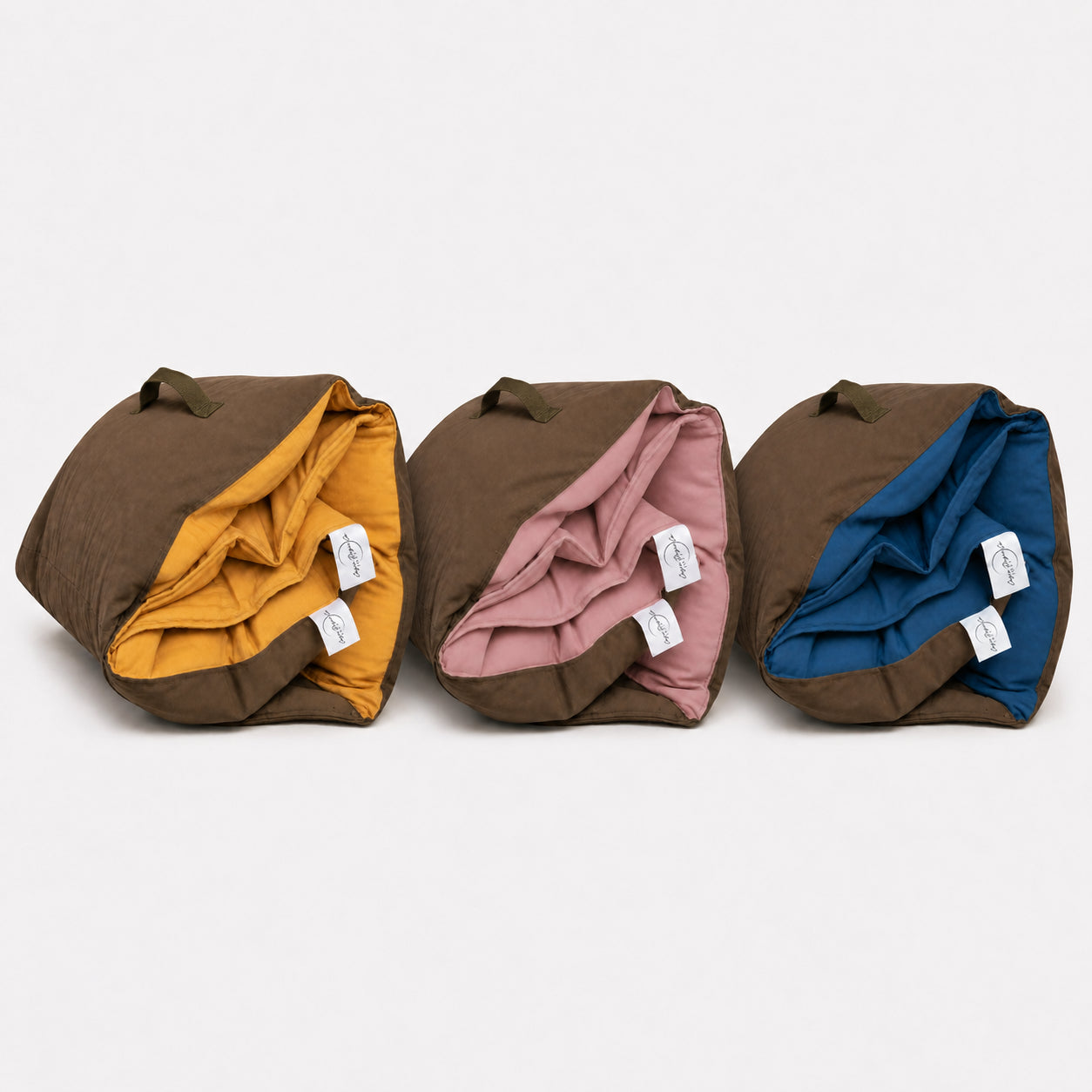
Our Colour of Country Joey packs flat and carries by its built-in handle, so it slots into the boot without a fight. If you are unsure whether a portable bed suits your child's sensory profile, our portable kids bed buying guide walks through fabric, packed size and washing before you commit.
Planning an Overnight Stay Near Mount Larcom
An overnight stay near Mount Larcom needs more planning than a city stop, because services are spread out, the drive between towns is long, and a late arrival can undo a good bedtime routine before it starts.
A travel-day-to-bedtime timeline
- Morning, before you leave: keep the home wake-up time and breakfast routine as close to normal as possible. Pack the essentials bag last so the familiar blanket and comfort item are within reach, not buried in the boot.
- On the road: plan a stop every 90 to 120 minutes where possible, and build the stops into the visual schedule so your child knows what happens next. Use the stop for a short walk and a snack that matches home mealtimes, not a long unstructured break.
- Late afternoon, on arrival: aim to arrive with daylight left so your child can see the room before dark. Walk through the room together, name each area in the same order as home (bed, bathroom, bag, door), and set up the blackout and white noise before the wind-down starts.
- Early evening: run the home bedtime routine in the same order, even if it starts 30 to 40 minutes later than home. Same bath or wash, same pyjamas, same two books, same comfort item within reach.
- Bedtime: keep the lights-down step and the quiet song identical to home. If your child needs a small light, use the same warm, low glow you trialled at home.
Local planning tips for the Mount Larcom area
- Bring your own bedding so the bed smells right on night one, and layer it over the accommodation sheets rather than replacing them.
If the journey goes wrong
Delays, roadworks and a late check-in are common on long regional drives.
Our range ships free across Australia. Our Colour of Country Joey is flat-packed for convenience.
A travel-day-to-bedtime timeline keeps the journey and the bedtime routine connected.
| Time | What to do |
|---|---|
| Morning, before you leave | Keep home wake-up time and breakfast routine; pack essentials bag last |
| On the road | Plan a stop every 90 to 120 minutes; short walk and snack |
| Late afternoon, on arrival | Arrive with daylight left; walk through the room together |
| Early evening | Run the home bedtime routine in the same order |
| Bedtime | Keep lights-down step and quiet song identical to home |
| First morning | Keep wake-up time close to normal; get outside for morning light |
What to Do After a Disrupted Night
After a disrupted night, the goal is not to catch up on sleep. It is to protect the next bedtime. Reset the routine, not the whole day.
Try this:
- Keep the morning wake-up time close to normal
- Get outside for morning light, which helps reset the body clock (Jet lag)
- Offer a short quiet rest after lunch, not a long nap
- Run the full bedtime routine again, in the same order
- Note what went wrong in a simple sleep diary
A sleep diary helps you spot patterns across a trip. Was it noise, light, or a late meal? One line per night is enough.
Choosing Portable Sleep Gear for Your Next Trip
Choosing portable sleep gear comes down to three things: how it feels, how it packs, and how it washes. For a sensory child, the feel matters most.
Our portable kids bed buying guide covers the full checklist, but here is the short version:
- Look for natural, soft fabrics with a consistent texture
- Check the packed size against your boot space
- Confirm the cover is washable, because travel is messy
- Choose a design with a familiar shape your child recognises
The Joey is made from recycled French linen with a waterproof PUL canvas backing. It is designed on Country for family trips.
Travelling with an autistic child asks a lot of your planning, and sleep is where it shows most.
Frequently Asked Questions
How can I help my autistic child sleep when travelling?
Start preparing several days before you leave by talking through the trip and practising short naps in the portable bed at home. Pack familiar bedding, pyjamas and a comfort item, and keep bedtime and wake-up times as close to normal as you can. On arrival, set up the sleep space straight away, reduce light and noise, and allow quiet wind-down time before bed. A visual schedule showing the day's steps helps children know what comes next.
What should I pack to help my autistic child sleep on holiday?
Bring the familiar blanket, plush toy and pyjamas your child uses at home, plus a portable bed or swag they have already practised on. Add a sleep diary, a visual schedule, ear defenders or a white noise app, and a small night light if your child needs one. Pack preferred snacks and a comfort item for the journey itself. Keeping fabric textures and bedtime items the same as home makes an unfamiliar room feel safer.
How do I keep my autistic child's bedtime routine while travelling?
Keep the order of steps the same even when the setting changes: dinner, bath or wash, pyjamas, quiet activity, story, bed. Aim for a regular bedtime and wake-up time within about half an hour of home. Use a visual schedule so your child can see the routine, and build in downtime before wind-down. If a travel day runs late, shorten the routine rather than skipping it entirely.
Can travel and changes in routine affect sleep for autistic children?
Yes. Unfamiliar rooms, different bedding, noise, light and disrupted mealtimes can all make sleep difficulties worse for autistic children. Sensory sensitivities often heighten after a long journey, and jet lag or late arrivals push bedtime out. Planning advance preparation, a consistent sleep routine and a sensory-friendly sleep space reduces the impact, and a sleep diary helps you spot what is working.
